
What I Do

I turn complex ideas into clear, compelling stories.

I’m a Toronto-based communications and PR professional with 10+ years of experience in journalism, podcasting, media relations and corporate communications. My work spans sectors including health, technology, infrastructure, sustainability and more. I bring a journalist’s curiosity to unfamiliar subjects, looking beyond the technical details to find the human stories, perspectives and experiences that make them meaningful.

The articles featured below are ones I’ve ghostwritten for organizations and subject-matter experts, shaping their ideas and expertise into clear, engaging narratives that connect with their audiences.

Standards to address Canada’s most common and costly natural disaster - The Environment Journal

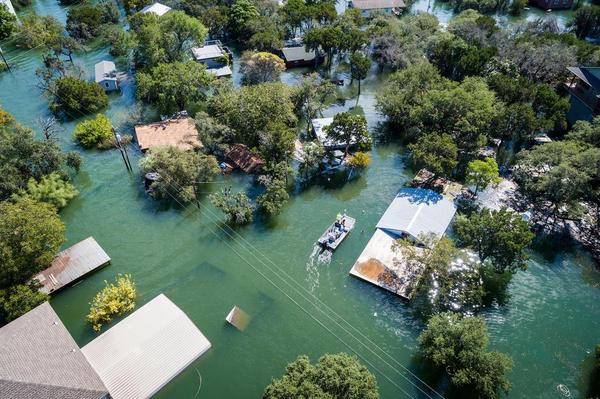
Flooding is Canada’s most common and costly natural disaster, affecting communities in every region of the country during every season. From intense rainfall overwhelming stormwater systems to rivers flooding and coastal storm surges, flood events are becoming both more frequent and more severe, placing increasing pressure on municipalities, infrastructure owners, emergency responders, and residents.Flood risks look different across Canada. For example, increasingly intense rai...


Quarterly Check-in: The rising economic burden of mental health at work in Canada

Canada is facing a rapidly growing economic burden as a result of poor mental health. A new report from the CSA Public Policy Centre, The Economic Cost of Mental Health in Canada, estimates the total cost has more than tripled since 2011, with much of that impact now felt in workplaces through lost productivity, disability claims, and workforce participation challenges.
The findings reveal that mental health is no longer only a healthcare issue,...

Building Circular Economy Foundations: Why Standards Matter

The transition to a circular economy is often described in aspirational terms: redesigning systems, eliminating waste, and keeping materials in use for as long as possible. While those ambitions are broadly shared, the practical challenge remains the same across sectors: how do we move from intent to implementation in a way that is credible, consistent, and scalable?
In my role as Director of Environment & Business Excellence Standards at CSA Group, I sit at the intersection of two compl...

A cohesive framework for transit and passenger rail systems - ReNew Canada

Fifty years ago, Canada was recognized as a global leader in public transit design and delivery. The country’s early rail and streetcar systems set a model for reliability, safety, and innovation. Cities like Toronto, Montreal, Edmonton, and Vancouver developed networks that shaped how Canadians moved, connected, and built communities.


Over time, however, as other countries in Asia and Europe expanded high-speed networks and built seamless regional transit systems, C...

A Bridge to the Future: How Canada’s bridge code embeds climate resilience into infrastructure design

Canada is making significant investments in infrastructure. From the construction and maintenance of major public works like bridges, highways, and rail systems to the development of residential areas and community facilities, billions of dollars have been committed to projects that will help shape the country for generations. These investments are essential for economic growth and connectivity, helping ensure sustainable development and improving quality of life for all Canadians. Completing th...

The Canadian Electrical Code: Adapting to Change and Driving Innovation - Electrical Industry News Week

Since its first publication in 1927, the Canadian Electrical Code, Part I (CE Code Part I), has been a vital instrument in promoting electrical safety across Canada. Its creation was spurred by the widespread adoption of electricity in the early 20th century.


In 1881, Canada saw its first hydro-powered generator at Chaudière Falls in Ottawa/Gatineau, and two years later, electric lights illuminated Parliament....

Circular strategies: Extending the life of existing buildings

While Canadians often think of cars and heavy industry as the most significant contributors of greenhouse gas (GHG) emissions, the buildings people live and work in should not be ignored. According to the Canada Green Building Council (CAGBC), the operation of buildings alone is responsible for 17 per cent of Canada’s total carbon emissions. This number skyrockets to 30 per cent when embodied carbon emissions are taken into account, as this is the pollution generated from manufa...